Aesthetic
SLA printing produces parts and prototypes that rival injection moulding for visual quality.

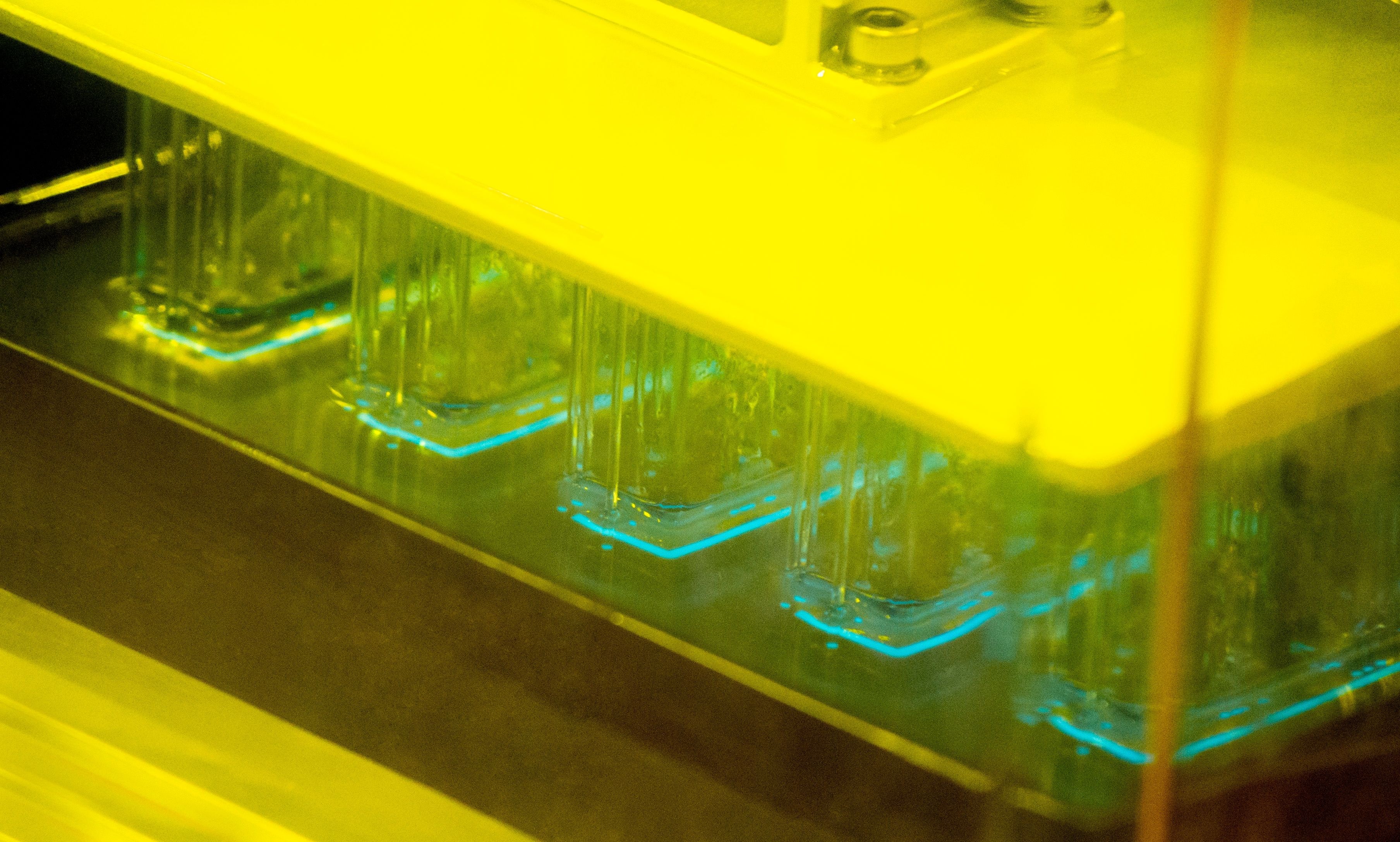
SLA 3D printing is a high-precision additive manufacturing process that uses liquid resin and UV light to produce parts with exceptional surface quality, fine detail and smooth finishes. Combined with AMufacture’s integrated manufacturing infrastructure, it becomes a powerful tool for rapid prototyping and cost-effective, low-volume production runs.
SLA printing produces parts and prototypes that rival injection moulding for visual quality.
Enjoy greater design freedom with fine features, sharp edges and intricate geometries.
AMufacture integrates into your workflow, unlocking seamless collaboration at every step.
Parts are stored securely in your Digital Warehouse for easy repeat production.
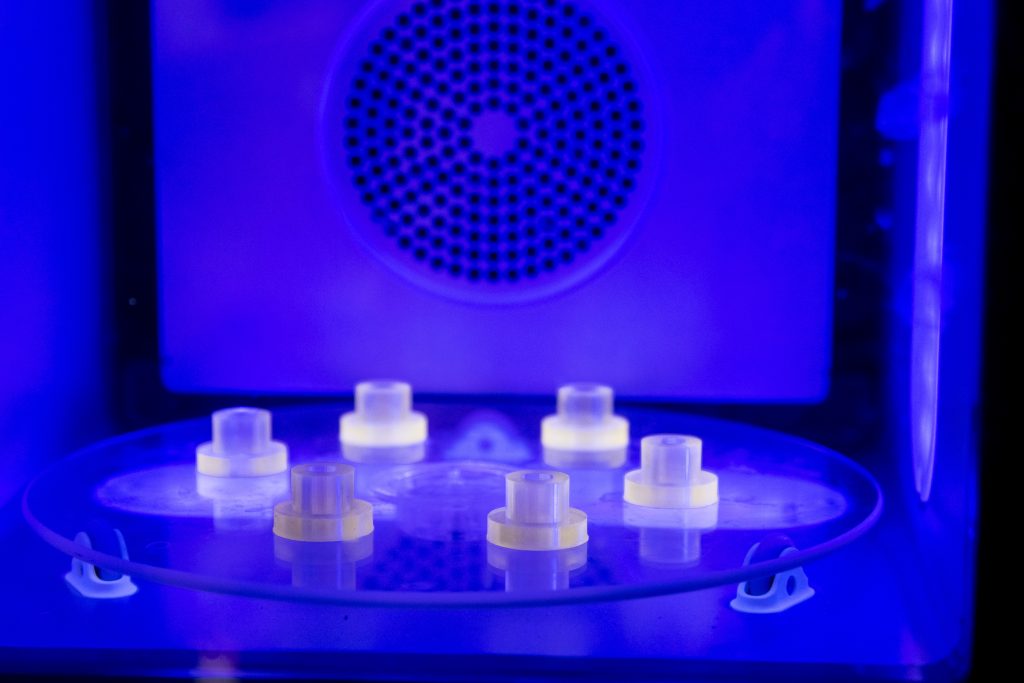
Stereolithography (SLA) is one of the earliest and most established 3D printing technologies. It works by transforming a photosensitive liquid resin into hardened plastic using a UV laser. The laser traces the design layer by layer, resulting in highly accurate solid parts.
As an additive manufacturing process, SLA eliminates the need for tooling associated with traditional manufacturing methods such as injection moulding, enabling faster iteration and reduced lead times.
Unlike powder-based or filament-based methods, SLA printing produces parts with smooth surfaces and fine feature resolution straight off the machine.
This makes it particularly suitable for visual prototypes, master patterns and components where surface quality is critical.
Stereolithography 3D printing produces parts with smooth surface finishes and excellent visual quality. It often remains the optimal choice for presentation models, cosmetic prototypes and low-volume customer-facing parts.
SLA printing excels at producing fine details, sharp edges, thin walls and intricate geometries. In terms of pure detail resolution, it outperforms fused deposition modelling (FDM), selective laser sintering (SLS) and often Multi Jet Fusion (MJF).

With a wide range of material options, SLA printing can produce parts tailored for flexibility, transparency, heat resistance and biocompatibility, allowing manufacturers to meet a variety of cross-industry use cases.
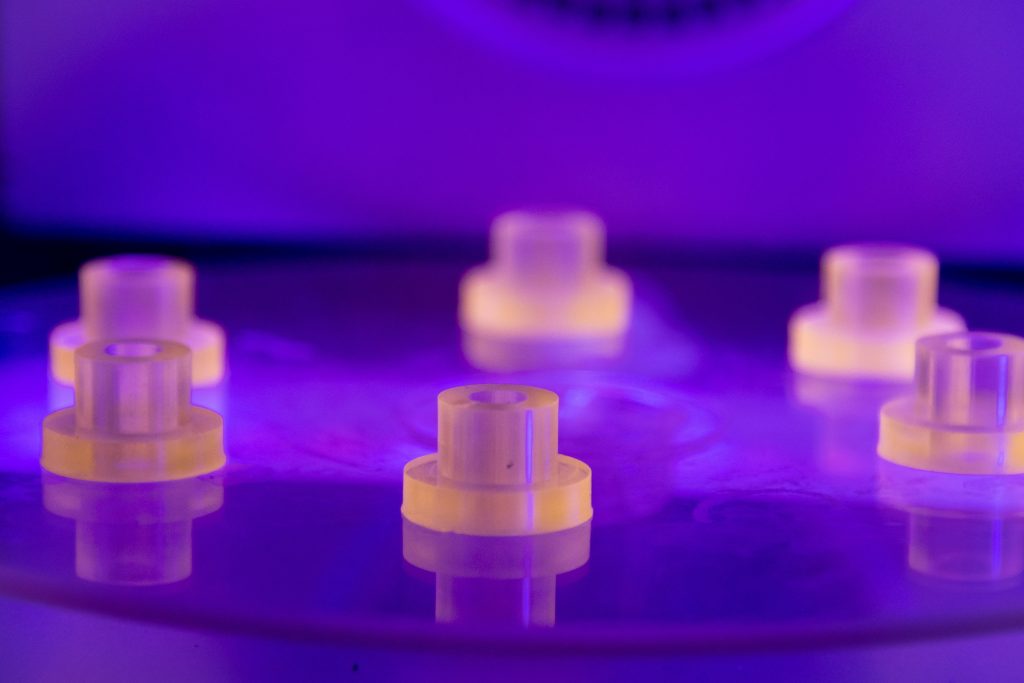
SLA 3D printing is widely adopted in the medical and dental industries, where its precision and smoothness support the rapid, cost-effective production of anatomical models and patient-specific surgical guides.

When you partner with AMufacture, additive manufacturing becomes a core component of a flexible, resilient supply chain. We act as an extension of your team, offering end-to-end support from design optimisation to post-processing.

AMufacture is more than a contract manufacturing partner. We are strategic collaborators, offering expert design, production and post-processing support to bolster supply chain resilience and enable fast, repeatable, scalable production.

As a leader in the additive manufacturing industry, AMufacture supports its collaborators with unrivalled access to 3D printing technologies and materials. Our robust SLA printing service is backed by one of the UK’s most advanced Multi Jet Fusion (MJF) fleets.
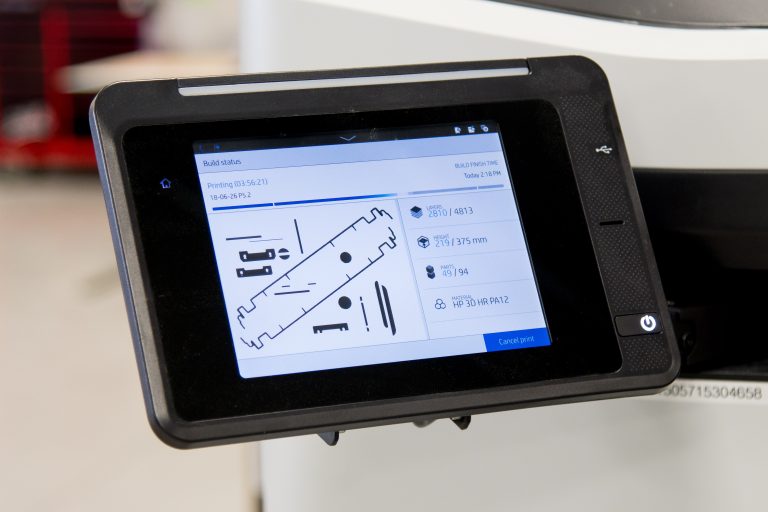
Our secure digital platform enables a truly collaborative partnership. Harness industry-leading design-optimisation expertise on demand, track parts in real-time throughout production and build a Digital Warehouse of components and workflows for seamless reordering.
After your parts are printed, we can offer a wide range of in-house finishing capabilities to ensure optimal performance and visual presentation. It’s all part of our end-to-end, collaborative manufacturing workflow. We handle every stage of production, transforming additive manufacturing from a point solution into an agile, always-on capability.
SLA printed parts typically undergo several finishing steps:
Additional finishing options include:
These processes enhance both surface quality and functional performance.
AMufacture’s stereolithography printing services are trusted by partners across sectors. By enabling rapid prototyping and seamless iteration, we help our industry collaborators accelerate innovation without the costs and lead times of traditional tooling.

SLA 3D printing operates on the principle of vat polymerisation. A build platform dips into a tank filled with liquid photopolymer resin, then a UV laser selectively cures the resin layer by layer to create a solid object.
The SLA printing process follows a precise, repeatable sequence:
SLA technology is widely recognised for its accuracy and surface finish. However, like all additive manufacturing technologies, it operates within defined manufacturing constraints:
SLA 3D printing produces parts with isotropic mechanical properties due to its layer-by-layer photopolymerisation process, resulting in strong, uniform strength across all axes.
Material behaviour can also vary depending on resin formulation, particularly under UV exposure, heat and long-term mechanical stress.
SLA printed parts excel in detail and finish, but they are generally less suitable for high-load functional applications compared to thermoplastics produced via SLS or MJF.
SLA materials are thermosetting polymers. That means they cannot be remelted after curing, unlike thermoplastics used in other 3D printing methods.
They are based on liquid photopolymer resin systems engineered for specific applications:
Typical material properties include:
SLA resins are ideal for aesthetics and precision, though they may require validation for long-term functional use. They are also often formulated to exhibit a wide range of mechanical properties, including high heat deflection temperature and impact resistance, making them suitable for various applications.
SLA is often used to support secondary materials like glass or ceramic to enhance specific properties, such as heat deflection or impact resistance.
SLA and fused deposition modelling (FDM) differ significantly in output and application:
SLA is preferred for appearance and precision, while FDM is often chosen for cost-effective, durable prototypes.
SLA and Multi Jet Fusion (MJF) are designed for different manufacturing priorities:
SLA is ideal for visual prototypes and intricate, high-precision components, whereas MJF is better suited to the rapid, repeatable production of functional parts.
Designing for SLA printing can significantly improve outcomes and reduce quoting friction. AMufacture provides design optimisation support as standard, helping refine geometries for SLA technology while balancing performance, cost and manufacturability.
Bottom-up SLA printers cure thin layers of resin from below using a transparent tank, while top-down systems cure from above and are typically used for larger, industrial builds.
SLA parts can degrade or become brittle with prolonged UV exposure unless properly post-cured and protected.
That’s one reason SLA is often preferred for projects where aesthetics and precision are more critical than raw durability.
Yes, certain SLA resins can produce highly transparent parts when polished and finished correctly.
Both are good 3D printing options for rapid prototyping. However, SLA uses a UV laser to cure resin point-by-point for high precision, while digital light processing (DLP) cures entire layers at once, typically making it faster but slightly less precise for fine details.
With AMufacture’s best-in-class 3D printing fleet, you unlock more ways to deliver on production goals and bolster supply chain resilience.
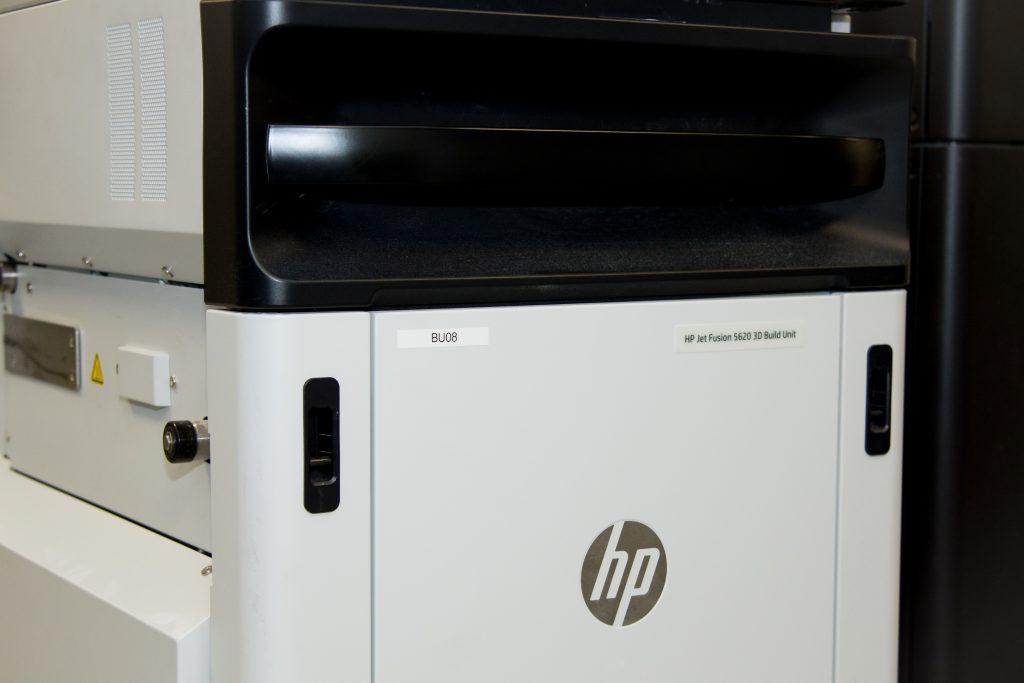
A powder-based process that uses fusing agents and thermal energy to produce strong, consistent parts with exceptional speed and batch-production efficiency.
Best for: end-use parts, scalable production, rapid iteration
A resin-based process that harnesses projected light to cure entire layers in one go, enabling rapid production of highly detailed parts.
Best for: fine detail, small parts, smooth finishes
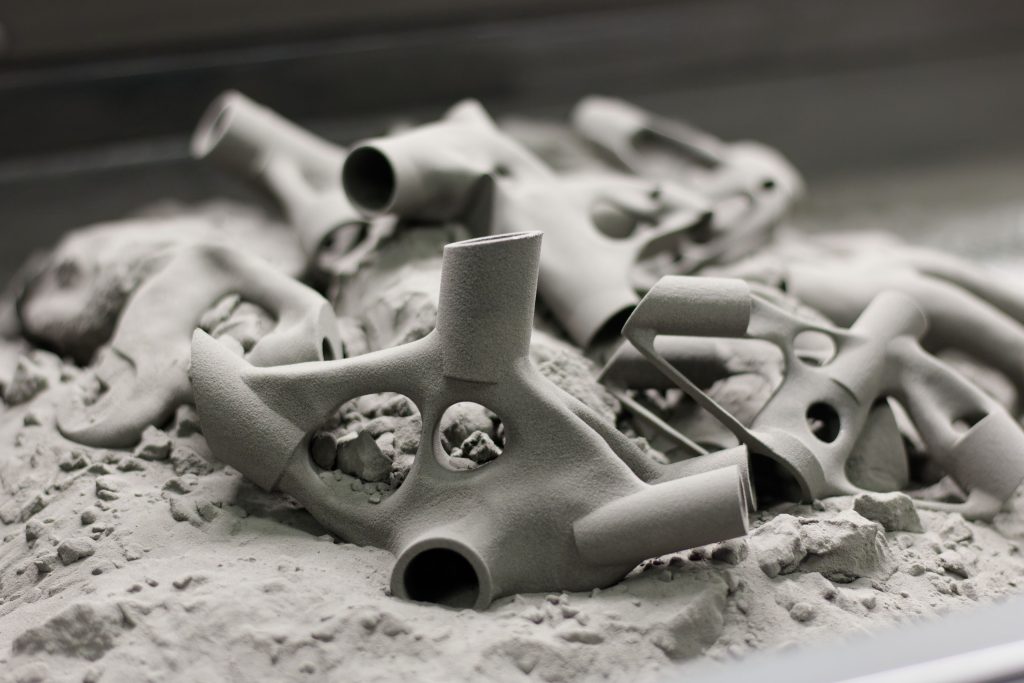
A powder-based process that uses a laser to fuse nylon materials into strong, functional parts without support structures.
Best for: large components, lighter colours, small production runs
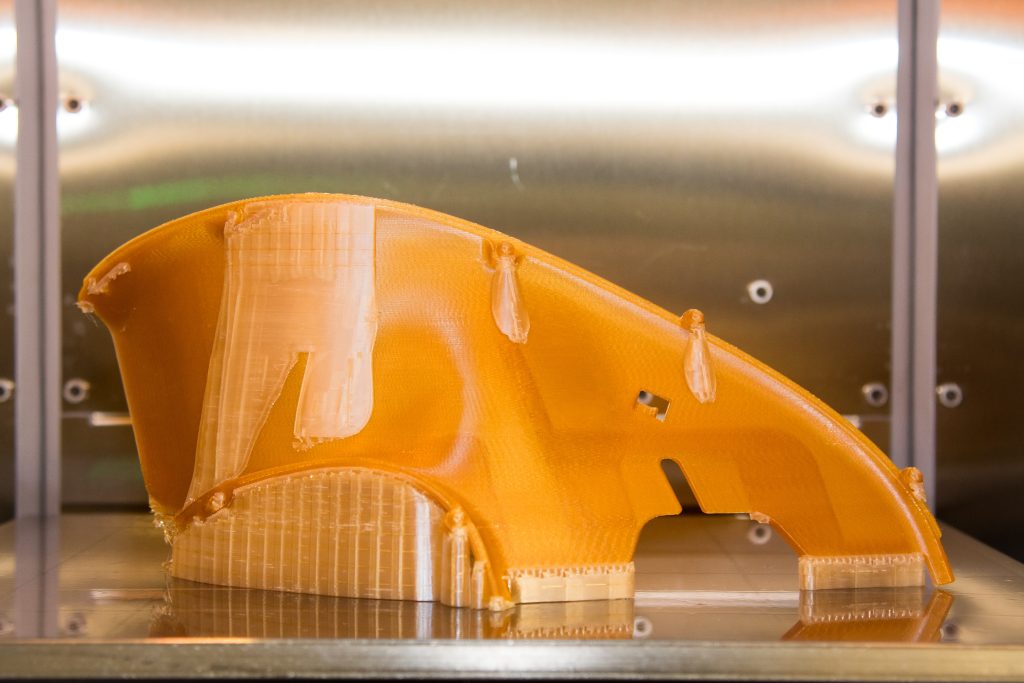
A material extrusion process that uses durable thermoplastics to build parts layer by layer.
Best for: large components, durability, tooling
If you have any questions about our services or would like to discuss your project with us, please don’t hesitate to contact us.
"*" indicates required fields